The safest way to get rid of wasp removal Toronto is to avoid Nest disturbing an active colony, keep people and pets away, identify where the nest is located, and use professional removal when the nest is difficult or dangerous to access. Trying to knock down or aggressively disturb an active nest can trigger defensive behaviour and increase the risk of stings. Health Canada notes that wasps may sting when people approach a nest accidentally or disturb wasps guarding it.
A wasp nest is a structure built by wasps to shelter the colony, raise young, and protect developing insects. The best way to deal with one depends on the species, nest location, accessibility, and level of activity.
For Toronto homeowners, the first priority is not removing the nest as quickly as possible. It is determining how to deal with it without creating a greater risk.
How Can You Tell If You Have a Wasp Nest?
You can often confirm a wasp nest by watching repeated wasp activity around one location. A visible nest, repeated entry into one opening, or wasps consistently returning to the same sheltered area can indicate an established colony.
Common locations include:
- Under roof eaves and soffits
- Beneath decks, balconies, and overhangs
- Inside sheds or other protected structures
- In wall or roof cavities
- In trees or shrubs
- Underground
Yellowjackets can nest in buildings, underground locations, trees, and other sheltered sites.
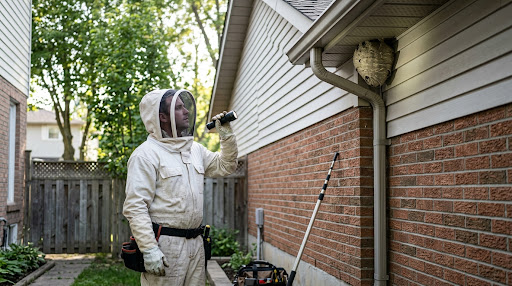
Paper wasps commonly construct exposed nests in protected areas around buildings and other structures. Recognizing the nesting pattern can help determine whether the problem involves an exposed nest or a concealed colony.
What Is the Safest Way to Remove a Wasp Nest?
The safest approach is to leave an active nest undisturbed until the appropriate removal method has been determined. This is especially important when the nest is high, concealed, near an entrance, or close to children and pets.
Before attempting how to remove a wasp nest, take these precautions:
- Keep children and pets away from the area.
- Do not hit, shake, burn, or physically disturb the nest.
- Avoid standing directly beneath an active nest.
- Do not block an opening where wasps are actively entering a building.
- Do not attempt removal if someone nearby has a serious allergy to insect stings.
- Consider professional assessment when the nest cannot be safely reached or identified.
Health Canada also advises homeowners to correctly identify pests and consider hiring a professional pest-control operator when pesticides may be required.
Can You Remove a Wasp Nest Yourself?
DIY removal is not equally suitable for every nest. A small, clearly visible nest in an isolated location presents a different risk from a colony inside a wall, beside a doorway, or several metres above the ground.
The location matters because accessing an elevated or concealed nest can expose a homeowner to both sting and fall hazards. Yellowjackets can also nest inside buildings, which means the visible activity may not show the full extent of the colony.
Pesticide use also requires care in Canada. Health Canada states that homeowners should use only products authorized for use in Canada, follow the product label, and never make homemade pesticides.
For that reason, spraying a product into an unknown wall cavity or using an improvised treatment is not a reliable general solution.
When Should You Call a Professional for Wasp Removal?
Professional wasp removal Toronto services are particularly relevant when the nest presents an access or sting-risk problem.
Professional assessment makes sense when:
- The nest is inside a wall, soffit, attic, or other cavity.
- The nest is high on a roofline or tree.
- Wasps are entering through a building opening.
- The nest is beside a front door, walkway, patio, or children’s play area.
- There is significant wasp activity around the property.
- You cannot confidently identify the insect.
- Someone in the household has a known allergy to stinging insects.
Health Canada reports that severe allergic reactions to wasp venom can occur and recommends immediate medical attention for serious symptoms such as unusual swelling, dizziness, or shortness of breath after a sting.
Professional treatment can also be more appropriate when the objective is not simply to remove a visible nest but to locate and address a concealed colony.
How Can You Get Rid of Wasps Around Your Home?
Reducing food, water, and nesting opportunities can help make a property less attractive to wasps, although prevention cannot guarantee that a nest will never appear.
Health Canada recommends inspecting the home and surrounding yard in early summer for wasp activity and developing paper nests. It also recommends preventive practices when wasp populations become a nuisance.
Useful prevention steps include:
- Keep outdoor food and sweet drinks covered.
- Clean food and drink spills promptly.
- Keep garbage containers closed.
- Monitor sheltered areas around eaves, sheds, decks, and other structures.
- Inspect the exterior of the property periodically for early nest activity.
- Deal with recurring nesting locations rather than only individual flying wasps.
Wasps are not simply pests with no ecological purpose. Health Canada notes that wasps prey on insects and can also act as pollinators, so controlling a colony is most relevant when it creates a safety or nuisance problem.
How Much Does Wasp Nest Removal Cost in Toronto?
Wasp nest removal Toronto cost varies according to the nest rather than one fixed citywide price. Accessibility, nest location, species, height, and whether the colony is concealed can all affect the quote.
Published 2026 Canadian pricing information places a typical single-nest removal around 150–500, while Toronto-specific figures are commonly around 200–500. These are market reference ranges, not guaranteed prices for a particular property.
A professional quote may be higher when:
- The nest is inside a wall or soffit.
- Special access equipment is required.
- The nest is unusually high.
- Multiple nests are present.
- Additional treatment or follow-up work is required.
The most useful question when comparing quotes is therefore not only “How much does it cost?” but also what work is included in the quoted price?
What Should You Do Before a Wasp Nest Is Removed?
Before a technician or homeowner attempts treatment, the affected area should be made as safe as practical.
Keep people away from the nest and avoid unnecessary activity around the entrance or flight path. Do not use homemade pesticide mixtures. Health Canada specifically warns against making homemade pesticides and recommends following the label instructions for registered products.
If the nest is close to a frequently used entrance, temporarily use another entrance where practical. A photograph can also help with initial assessment, but it should only be taken from a safe distance.
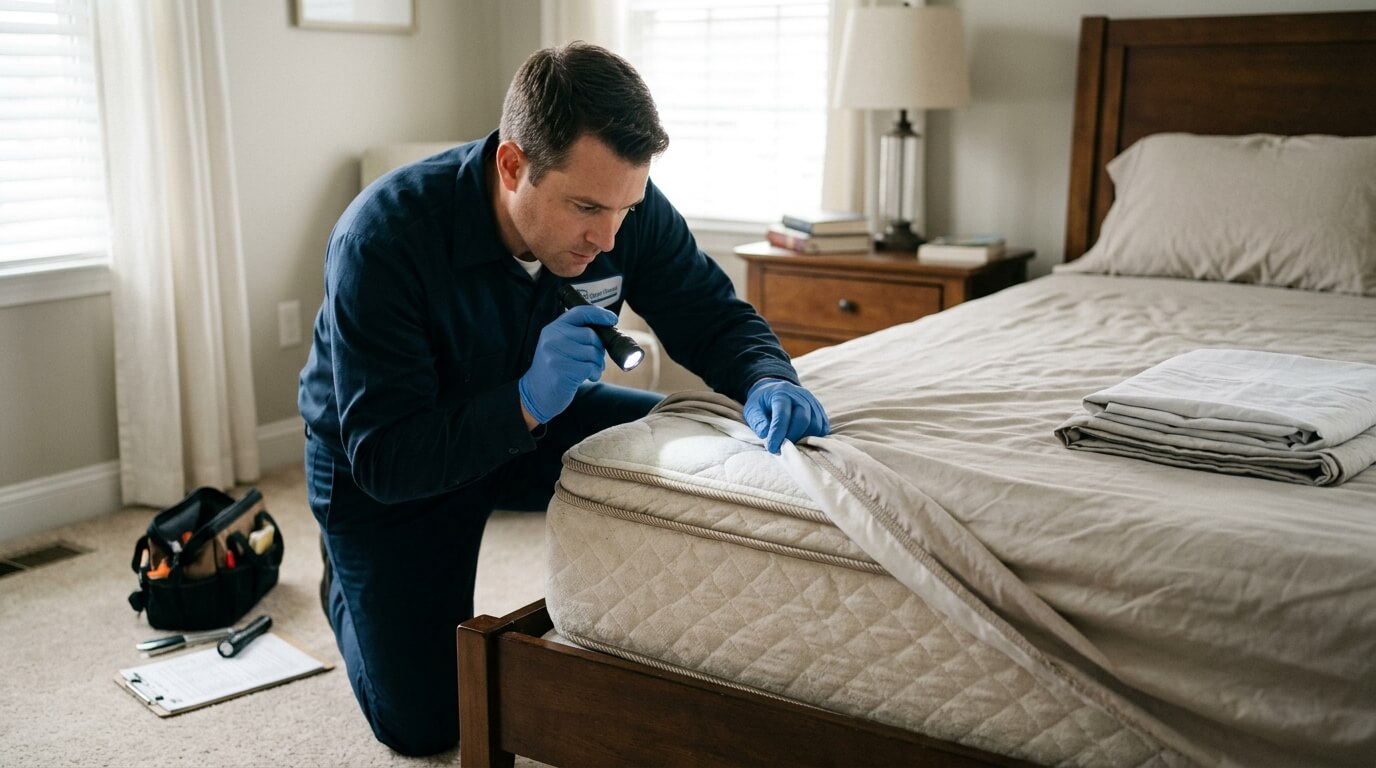
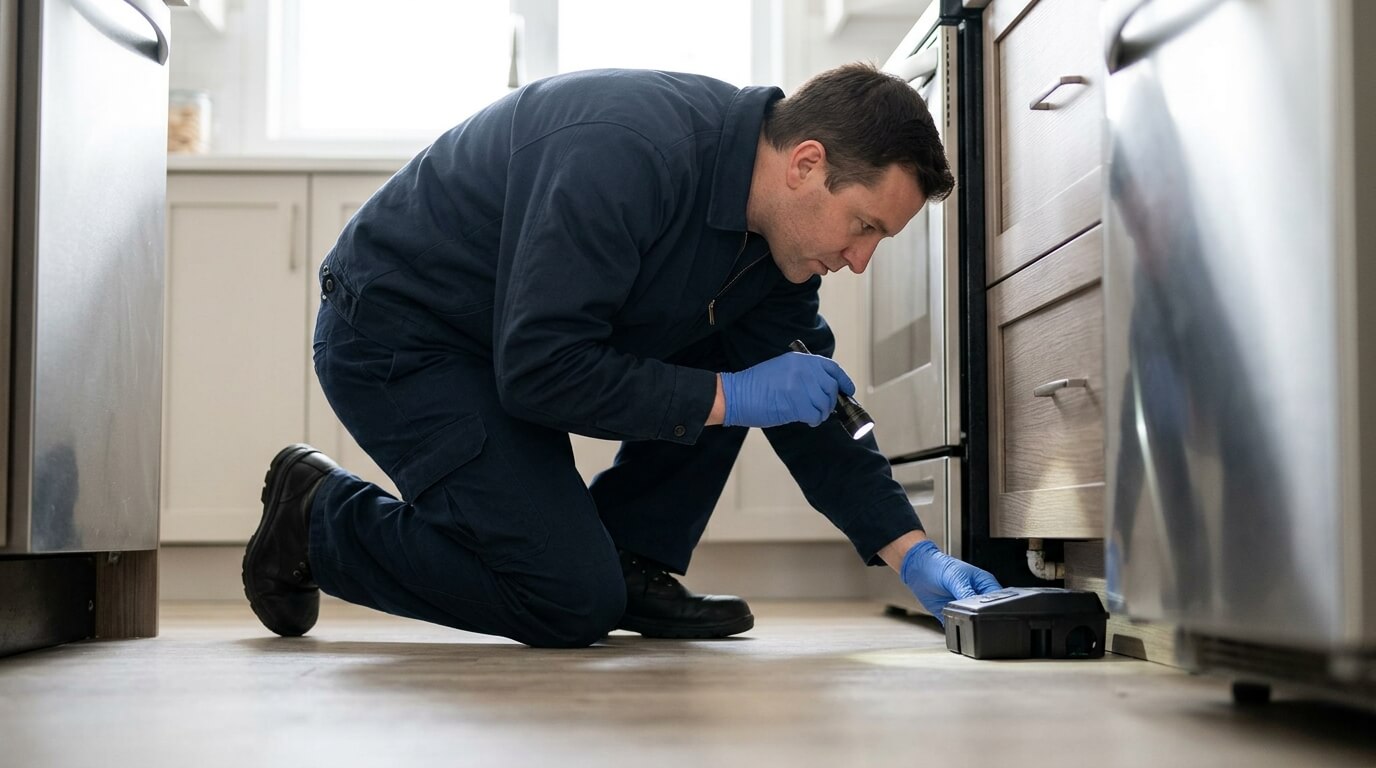
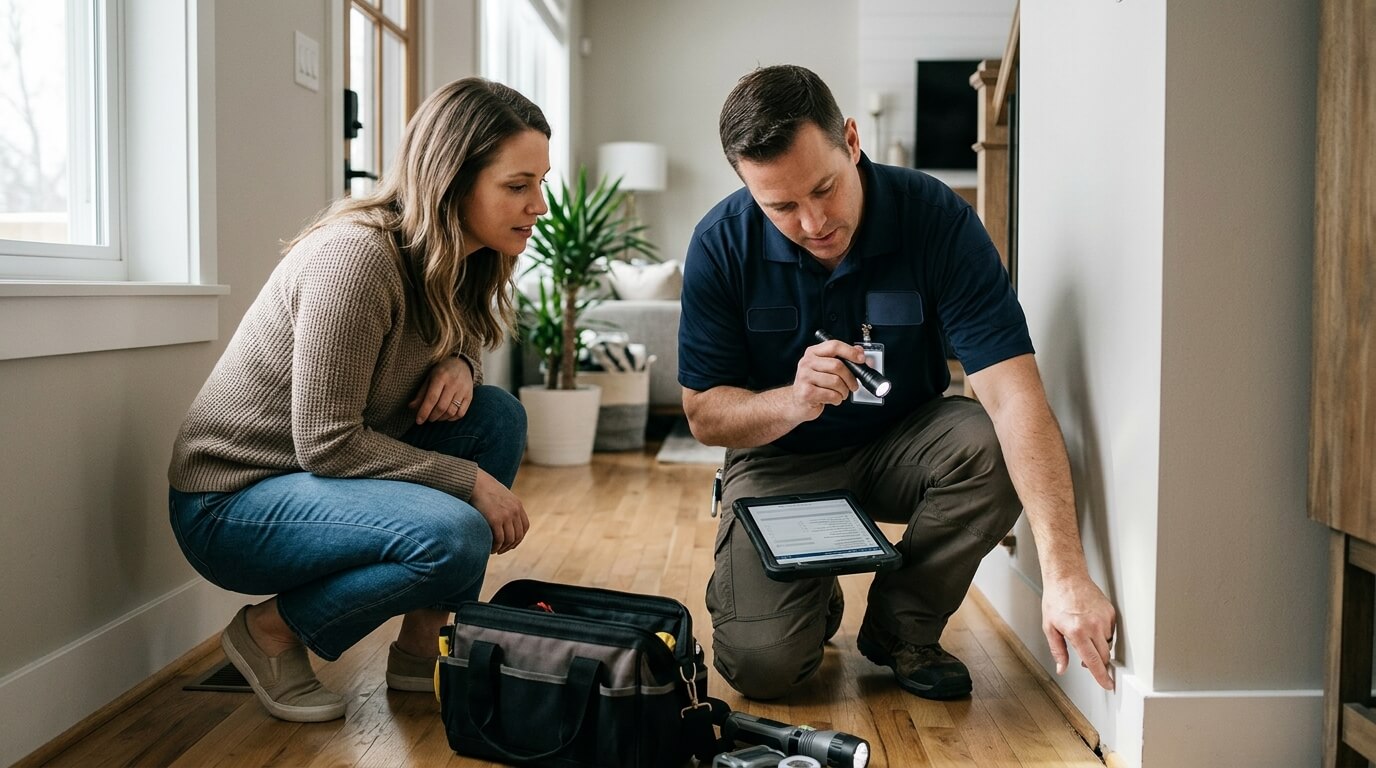
For Toronto property owners looking for Toronto pest control services, the next step can be a professional assessment of the nest location and the appropriate treatment approach.
What Happens After a Wasp Nest Is Removed?
Removing a visible nest does not automatically mean there are no remaining wasps or that another colony cannot establish nearby.
The result depends on whether the colony was fully addressed and whether the insects were using a concealed nesting site. In buildings, repeated wasp activity from a wall, soffit, or roof opening should therefore be investigated rather than assumed to be a separate random infestation.
Ongoing inspection can also help identify cracks, sheltered areas, or other conditions that may support future nesting.
Frequently Asked Questions
How do I get rid of wasps without getting stung?
Keep your distance from the nest, avoid sudden disturbance, and do not physically attack an active colony. Professional removal is the safer option when the nest is difficult to access or located near people.
How do I remove a wasp nest from a wall?
A nest inside a wall should not be treated like an exposed nest. The entry point and concealed colony should be assessed before treatment, because simply blocking an active opening may not address the colony inside.
How do I get rid of wasps around my house?
Reduce exposed food and garbage sources, inspect sheltered areas for early nest activity, and address established nests when they create a safety or nuisance problem. Health Canada recommends early-season inspection and preventive measures.
What is the cost of wasp nest removal in Toronto?
Published 2026 market guides generally place single-nest removal around 200–500 in Toronto, but actual pricing depends on access, location, nest type, height, and the work required.
Conclusion
Learning how to get rid of a wasp nest starts with assessing the risk rather than immediately disturbing the colony. Keep people and pets away, identify where the wasps are nesting, and avoid improvised pesticide treatments or physical removal of an active nest.
For an exposed and easily observed nest, the situation may be straightforward to assess. A nest inside a wall, high roofline, soffit, or another difficult location presents a different level of risk and is better handled through professional pest control.
For Toronto homeowners, understanding the nest location, activity, and removal requirements also makes it easier to compare professional options and understand wasp nest removal Toronto cost before arranging service.