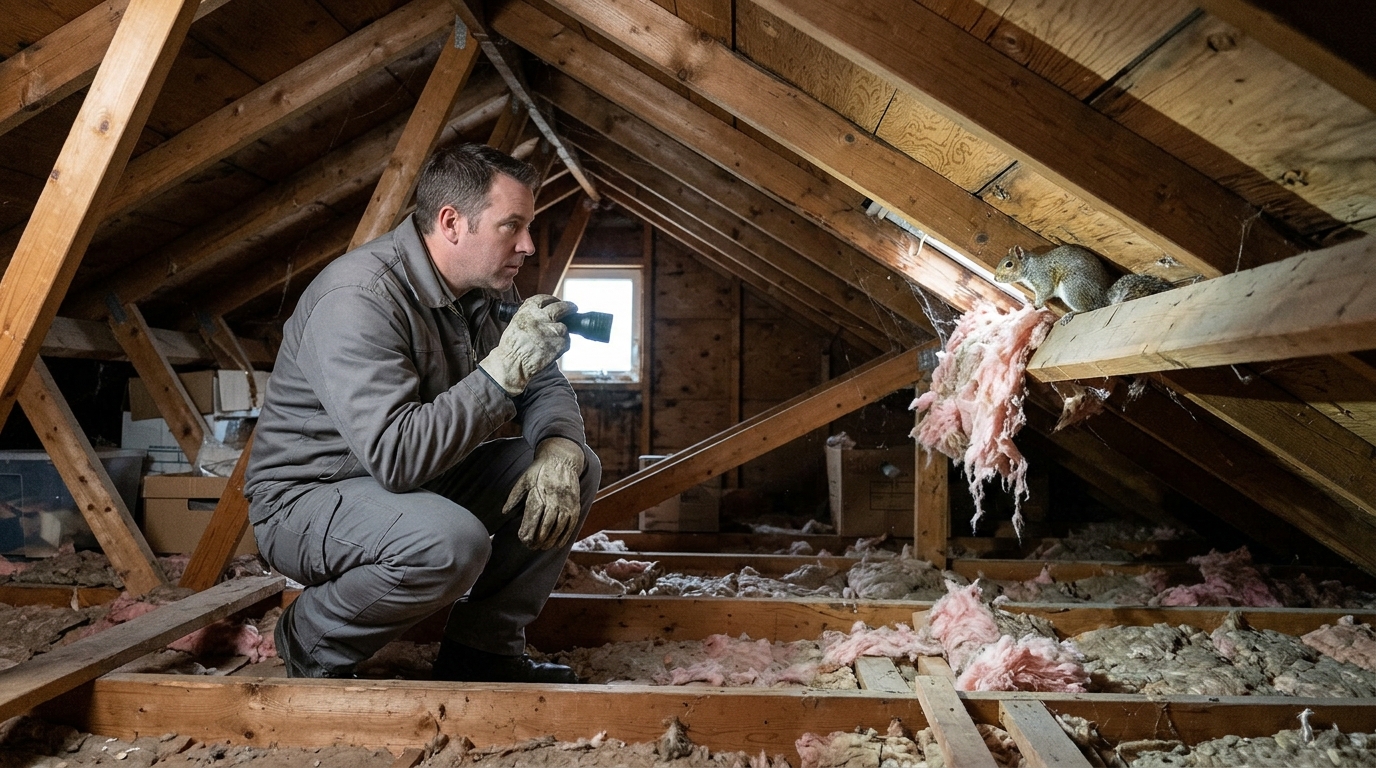
Squirrels in an attic can cause noise, damage insulation and create openings that allow other wildlife or pests to enter. Squirrels in an attic are a sign that an animal has found access to a sheltered space inside the roof structure. The first step is to confirm the animal’s presence and identify how it is getting inside. Removing a squirrel without checking for other animals or young can create additional problems.
Homeowners may hear scratching, running or chewing sounds, particularly in the morning or during daylight hours. A careful inspection can help distinguish squirrel activity from other causes of noise before any removal or exclusion work begins.
How Can You Tell If Squirrels Are Living in Your Attic?
Squirrels can leave several signs when they use an attic as a nesting or shelter area. Look for repeated activity rather than relying on one isolated sound.
Common signs include:
- Scratching and running sounds: Movement may be heard above ceilings, around roof spaces or inside walls.
- Chewing marks: Squirrels may gnaw on wood, plastic, insulation coverings and other materials.
- Disturbed insulation: Nesting activity can move or compress insulation.
- Droppings: Small animal droppings may appear near nesting or travel areas. Avoid handling them directly.
- Entry openings: Damaged roof edges, soffits, vents or gaps around roof features may provide access.
- Visible animal activity: Squirrels may be seen travelling along rooflines or entering an opening.
A single noise does not confirm a squirrel infestation. Birds, mice, rats and other wildlife can also create sounds in roof spaces. If the animal cannot be identified safely, an inspection is a more reliable next step than immediately sealing an opening.
How Do Squirrels Get Into Roofs and Attics?
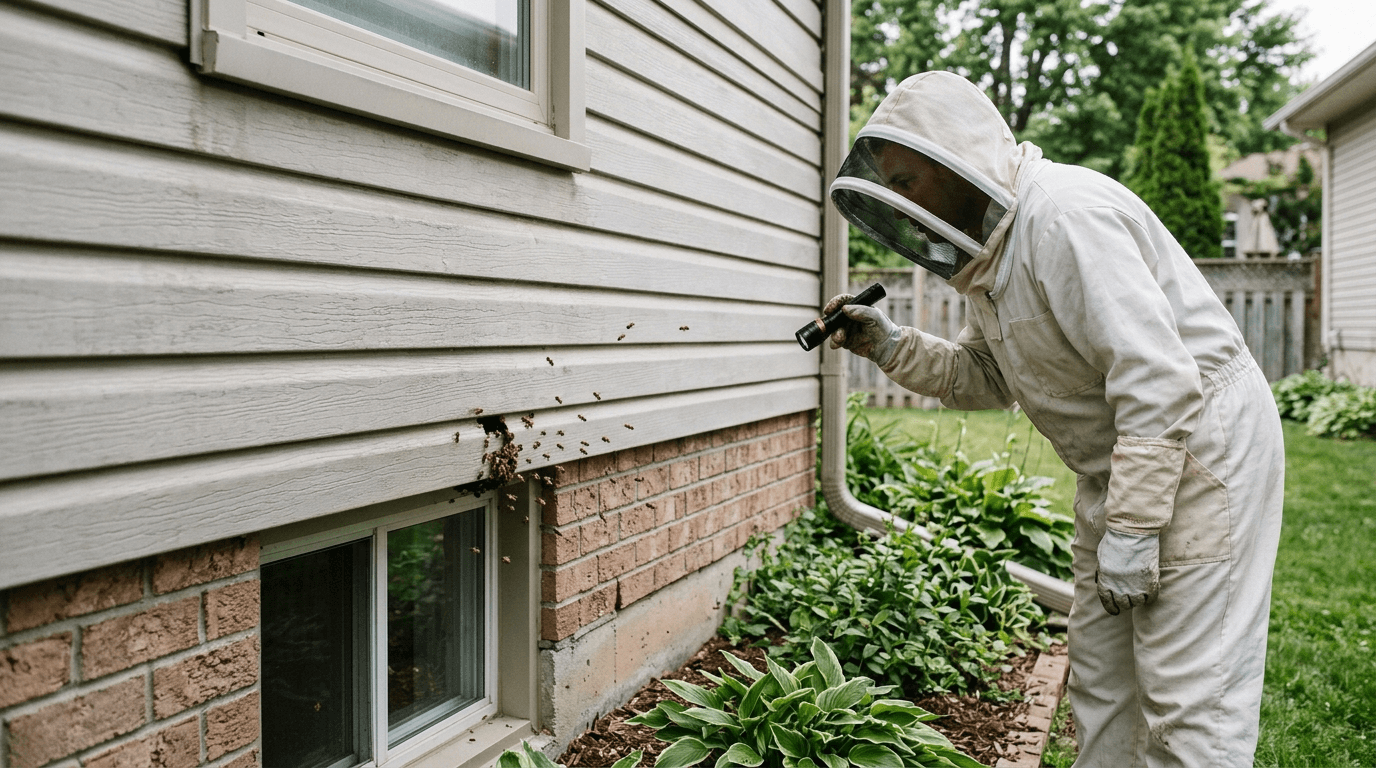
Squirrels can enter through openings in roof edges, soffits, vents, damaged fascia boards and gaps where building materials meet. Overhanging tree branches may also provide access to roof areas.
Once a squirrel finds a sheltered opening, it may use the space to rest or build a nest. An opening that appears small from the ground should not be ignored. The condition of the surrounding material and the animal’s ability to enlarge a gap can affect how it enters.
Inspect these areas from a safe position:
- Roof edges and soffits
- Fascia boards and roof intersections
- Attic vents and vent covers
- Gaps around pipes or other roof penetrations
- Areas close to tree branches
- Damaged exterior trim
Do not climb onto a roof without appropriate training and equipment. A ground-level inspection can identify visible damage, but a professional may be needed to assess high or concealed openings.
What Problems Can Squirrels Cause Inside a House?
Squirrels can damage building materials when they nest or move through an attic. The extent of damage depends on how long they have been present, the condition of the structure and the location of their activity.
Potential problems include:
- Torn or displaced insulation
- Chewed wood and other building materials
- Damage to wiring or cables
- Noise inside ceilings and walls
- Contamination from droppings and nesting material
- Damaged vents or roof openings
Chewed electrical wiring deserves particular attention because damaged wiring can create an electrical hazard. If you suspect wiring has been affected, avoid touching it and arrange an assessment by a qualified electrician.
Not every squirrel entering an attic will cause extensive damage. However, repeated activity should be investigated before it becomes a larger repair issue.
How Can You Get Squirrels Out of Your Attic?
The safest removal approach depends on the animal’s location, the number of animals and whether young may be present. Removing the animal and preventing re-entry are separate parts of the process.
A sensible process includes:
- Confirm the animal: Identify whether the noise or evidence is consistent with squirrel activity.
- Locate access points: Inspect the roofline, vents, soffits and other possible openings.
- Check for young: Do not block an entrance if dependent young may still be inside.
- Plan a suitable exit: The animal needs a safe way to leave without becoming trapped inside the building.
- Confirm the space is clear: Check for continued movement before closing access points.
- Repair the opening: Use suitable materials to prevent another entry.
- Check for damage: Inspect insulation, wiring and other affected areas.
The City of Toronto’s squirrel guidance advises caution when entering an attic and recommends contacting an animal removal agency if the space is unsafe. Toronto also emphasizes checking that squirrels have left before permanently blocking an entrance.
Avoid using poison, smoke or improvised chemicals to remove wildlife. These methods can create risks for people, pets and animals, and may leave an animal trapped inside an inaccessible part of the building.
How Can You Prevent Squirrels From Returning?
Prevention focuses on removing access and reducing conditions that attract wildlife to the property.
Useful measures include:
- Repair damaged soffits, fascia boards and roof vents.
- Install suitable, durable covers over openings.
- Keep garbage containers securely closed.
- Remove fallen fruit and spilled birdseed.
- Avoid leaving pet food outdoors.
- Trim branches that provide convenient access to the roof, where appropriate.
- Inspect exterior openings periodically, particularly after storms or roof repairs.
The Ontario government’s guide to preventing and managing conflicts with small animals recommends reducing food sources and sealing building openings while taking care not to trap animals inside.
Prevention should follow a confirmed removal or exit. Sealing an opening too early can leave an animal or its young trapped inside the structure.
How Much Does Squirrel Removal Cost?
Squirrel removal cost depends on the actual work required. A straightforward situation involving an accessible entry point may require less work than a problem involving multiple openings, inaccessible roof spaces or repairs to damaged materials.
Factors that can affect an estimate include:
- Property size and roof design
- Height and accessibility of the entry point
- Number of animals involved
- Presence of young
- Time needed to locate the access route
- Exclusion materials and repair requirements
- Follow-up inspection needs
Ask whether the estimate covers inspection, animal removal, exclusion work, cleanup and repairs. These may be separate services. A price that covers only the initial visit should not be compared directly with a quote that includes entry-point repairs and follow-up.
There is no single price that applies to every Toronto property. A written estimate based on the actual conditions is more useful than relying on a general online average.
When Should You Contact a Wildlife Removal Professional?
Professional help may be appropriate when squirrels are inside a ceiling or wall, the entry point is difficult to reach, there may be young in the nest, or the animal has not left after reasonable preventive steps.
It is also sensible to seek assistance when there are signs of electrical damage or when entering the attic would be unsafe. A professional assessment can help identify the animal, locate openings and plan exclusion without sealing an occupied space.
For information about available pest-related assistance, visit Ultimate Pest Solutions.
FAQs
Can squirrels live in an attic?
Yes. An attic can provide shelter and a place to build a nest, particularly when an opening allows access from outside.
What time of day are squirrels active?
Squirrels are generally active during daylight hours, so movement may be heard in the morning or during the day. Activity patterns can vary.
Should I seal the hole where a squirrel enters?
Not until you have confirmed that the animal and any dependent young have left. Sealing an occupied entry point can trap animals inside.
Can squirrels damage electrical wires?
Squirrels may chew wiring and other materials. Suspected electrical damage should be assessed by a qualified electrician.
How can I keep squirrels out of my attic?
Repair roof and soffit openings, secure vents, reduce accessible food sources and inspect the exterior for new gaps. Confirm that no animal is inside before sealing an opening.
Conclusion
Squirrels in an attic should be addressed by identifying the animal, locating its access point and confirming that the space is empty before repairs begin. Roof damage, displaced insulation and signs of chewing can indicate ongoing activity. Careful exclusion and maintenance can help prevent another entry. When the animal’s location is unclear or the attic is unsafe to access, a professional inspection is a practical next step.