The best way to choose a pest control company is to compare its qualifications, pest-identification process, treatment methods, safety practices, communication, and written service terms—not simply its price.
A pest control company is a professional service provider that identifies, prevents, and manages unwanted pests using appropriate control methods. A reliable company should be able to explain what pest is present, why it is there, what treatment is recommended, and what you can do to prevent the problem from returning.
The U.S. Environmental Protection Agency recommends choosing pest control providers carefully, checking licensing requirements, and looking for professionals with experience in Integrated Pest Management (IPM).
When several companies offer similar services, the following checklist can help you make a more informed decision.
What Should You Look for When Choosing a Pest Control Company?
A good pest control company should have appropriate credentials, relevant experience, insurance where applicable, a clear treatment plan, and transparent communication.
1. Does the company have the required license or certification?
Pest control licensing is generally regulated at the state, provincial, or local level, so requirements can vary depending on where you live.
Before hiring a company, ask for the applicable business license and pesticide applicator credentials. The person performing the treatment should have the appropriate qualification for the pest and type of application involved.
For example, University of Minnesota Extension recommends confirming that a pest control professional has a current pesticide applicator license with the correct classification for the pest problem. It also recommends asking about insurance, experience, IPM practices, treatment risks, guarantees, and written estimates.
Do not assume that a professional-looking website automatically means a company is properly qualified. Verify credentials through the relevant regulatory authority when that information is available.
2. How much experience does the company have with your specific pest?
Experience matters, but the most useful question is not simply, “How many years have you been in business?”
Ask:
- Have you treated this type of pest before?
- How do you identify the pest?
- What conditions are contributing to the infestation?
- What treatment methods do you normally consider?
- How will you determine whether the treatment worked?
Correct identification is especially important because different pests may require very different control methods. Penn State Extension advises consumers to ask companies to identify the pest and explain available control options rather than accepting a treatment recommendation without understanding the problem.
3. Does the company use Integrated Pest Management?
One of the strongest questions to ask when evaluating a pest control company is whether it uses Integrated Pest Management, or IPM.
The U.S. Environmental Protection Agency’s explanation of Integrated Pest Management describes IPM as an approach that combines pest knowledge, monitoring, prevention, and appropriate control methods while minimizing unnecessary hazards.
IPM does not mean “never use pesticides.” Instead, it emphasizes identifying the pest, monitoring the situation, preventing access to food, water, and shelter, and selecting effective control methods according to the circumstances.
A company practicing IPM may recommend measures such as sealing entry points, correcting moisture problems, improving sanitation, removing harborage areas, monitoring pest activity, and using targeted treatments when necessary.
That approach can be more informative than a company that immediately proposes a routine spray without first determining what is causing the infestation.
4. Will the company explain the treatment instead of simply selling it?
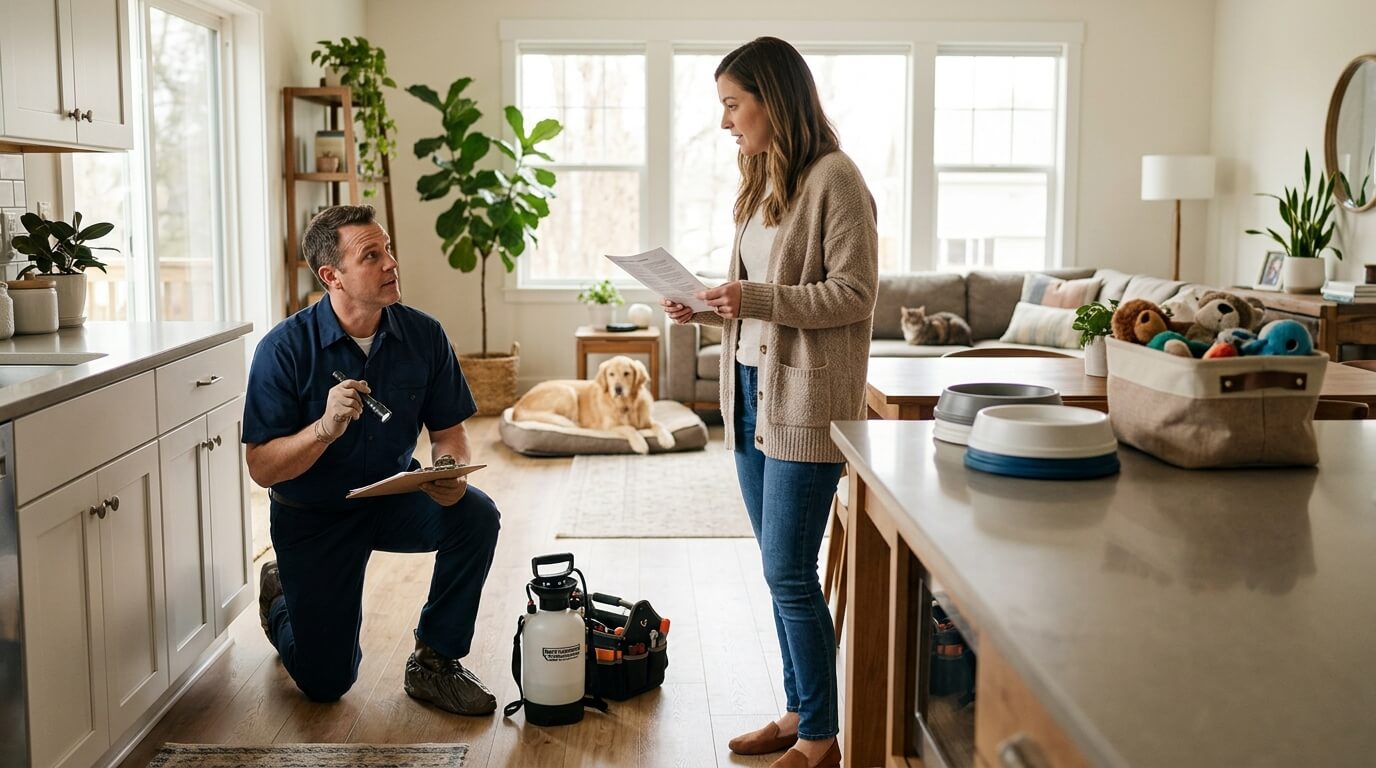
A reputable pest control company should be willing to explain what it plans to do.
Before approving service, ask:
- What pest are you treating?
- Where will treatment occur?
- Which control method will be used?
- Why is that method appropriate?
- Are there non-chemical or lower-exposure options?
- How should children and pets be protected?
- How long should treated areas remain unused?
- Will follow-up monitoring be needed?
Penn State Extension recommends asking about alternatives to pesticides, special precautions for children and pets, treatment timing, expected results, future inspections, and prevention.
A clear explanation is a positive sign. Pressure, vague answers, or promises that sound too good to be true should encourage you to look more closely.
How Can You Compare Pest Control Companies?
Compare companies based on the total service offered rather than comparing prices alone.
| Factor | Questions to Ask |
| Credentials | Is the company properly licensed or certified in your area? |
| Experience | Does it regularly handle your specific pest? |
| Inspection | Will the technician inspect and identify the problem? |
| IPM | Does the company use prevention, monitoring, and targeted controls? |
| Treatment | What products or methods are being considered and why? |
| Safety | What precautions are required for people and pets? |
| Follow-up | Is monitoring or another visit included when appropriate? |
| Documentation | Will you receive service details or treatment information in writing? |
| Cost | Is the estimate clear about what is included? |
| Guarantee | What does the guarantee actually cover, and for how long? |
This comparison can help you distinguish between a company that is simply offering a treatment and one that is offering a complete pest-management service.
Should You Choose the Cheapest Pest Control Company?
Price matters, but the cheapest quote is not automatically the best value.
A low price may reflect a limited scope of service, while a higher quote may include inspection, exclusion recommendations, monitoring, follow-up visits, or a more targeted treatment strategy.
Penn State Extension specifically advises consumers not to make cost the only consideration when selecting pest management services. It recommends comparing companies and evaluating their professional approach, safety practices, treatment options, and expected outcomes.
Ask each company for a written estimate that clearly explains what is included. That makes comparison much easier and reduces the possibility of misunderstandings later.
What Are the Warning Signs of a Pest Control Company to Avoid?
Warning signs include pressure to approve treatment immediately, unwillingness to identify the pest, unexplained chemical applications, vague pricing, and claims that cannot be supported.
Penn State Extension warns consumers about companies that use scare tactics, pressure customers into immediate decisions, claim to have secret formulas, or attempt to confirm an infestation solely from a description over the phone.
Be particularly cautious when a salesperson focuses heavily on urgency while providing little information about the underlying pest problem.
A legitimate pest problem can require prompt attention, but urgency should not prevent you from understanding the treatment being proposed.
Is a Local Pest Control Company Better?
A local company can be a practical choice because pest problems are influenced by local climate, buildings, seasonal patterns, and regulations.
However, “local” should not automatically be treated as a quality guarantee. Whether you are searching for an experienced pest control company near me or comparing companies across a wider area, use the same evaluation criteria: credentials, experience, inspection, treatment strategy, communication, safety, and written terms.
The goal is to find the right company for your particular pest problem—not simply the company with the nearest office.
What Questions Should You Ask Before Hiring a Pest Control Company?
Before you sign an agreement, ask these questions:
- What pest has been identified?
- What evidence supports that identification?
- What is causing or contributing to the problem?
- What treatment options are available?
- Can prevention or exclusion reduce the need for pesticides?
- What products or methods will be used?
- What precautions are needed for children, pets, food, or sensitive areas?
- How many visits are expected?
- What results should I reasonably expect?
- What happens if the pest problem continues?
- What exactly does the guarantee cover?
- Can I receive the service details and estimate in writing?
These questions turn a sales conversation into an informed comparison.
How Can You Prepare for a Pest Control Inspection?
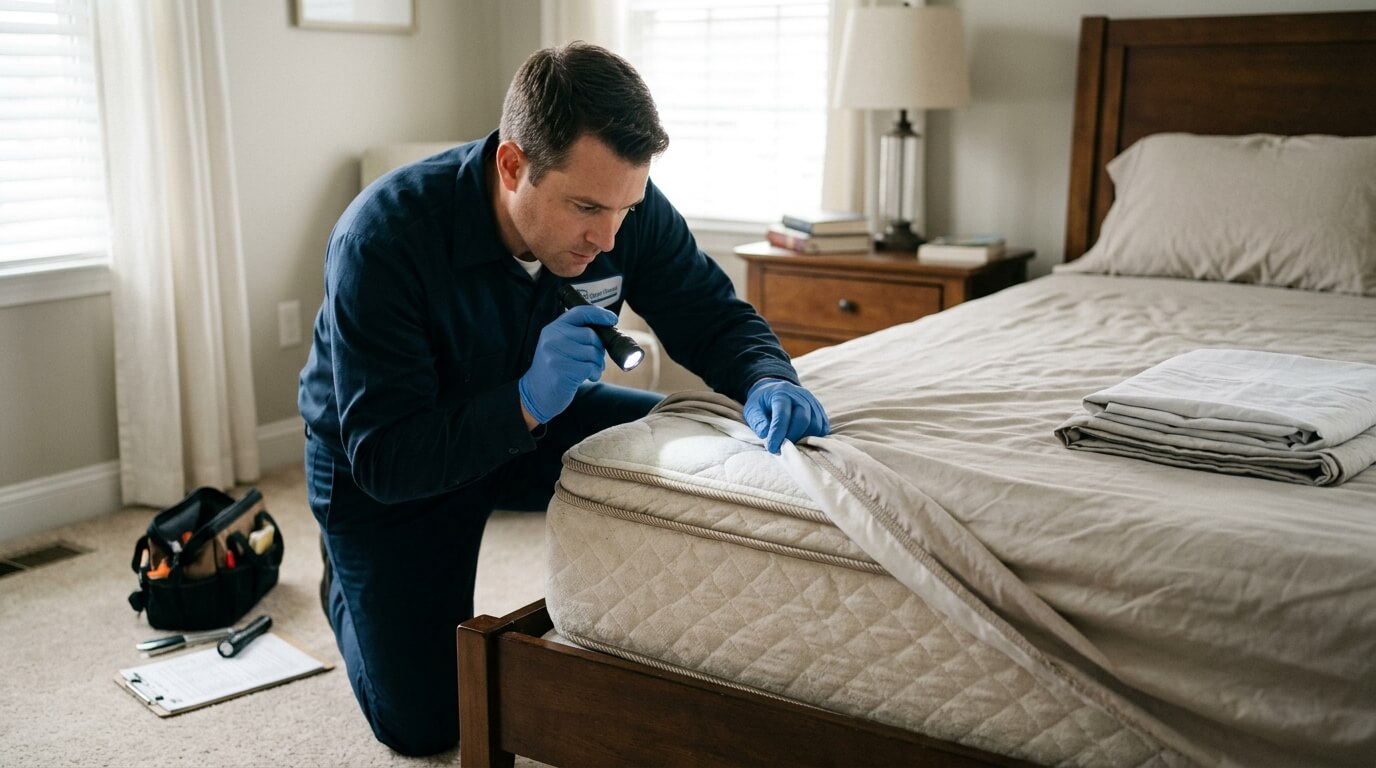
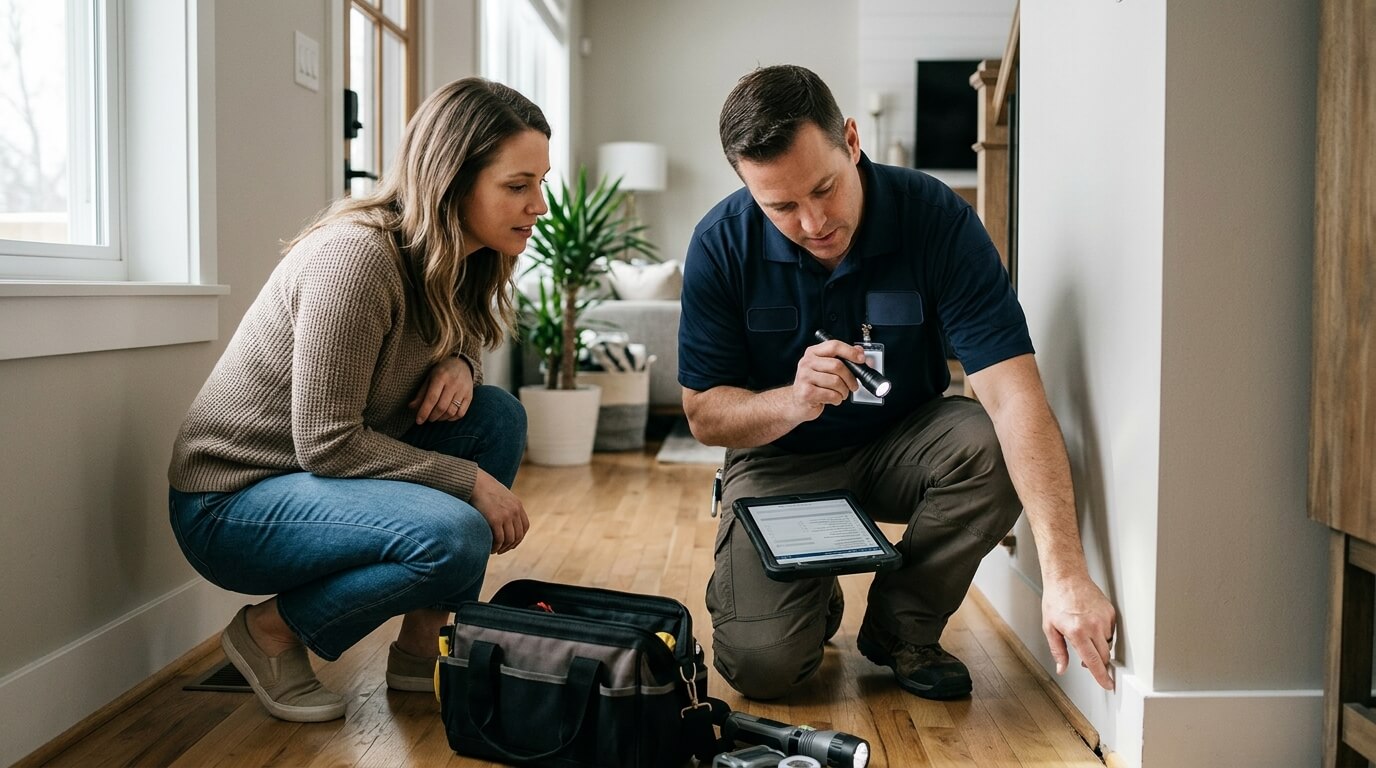
Before the technician arrives, document where you have seen pests, when you noticed them, and any signs such as droppings, damage, nests, or entry points.
Avoid cleaning away important evidence immediately unless doing so is necessary for sanitation or safety. Photographs can also help document recurring activity.
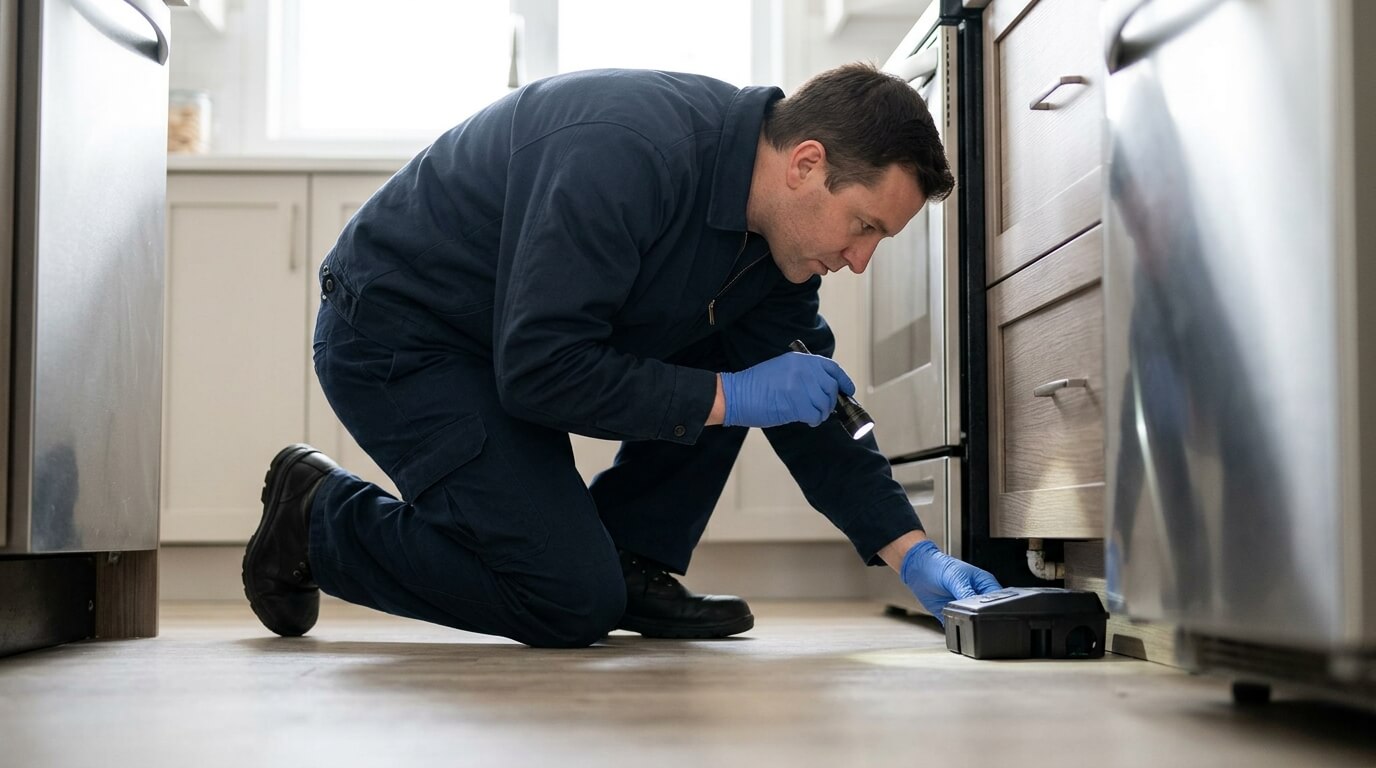
The technician should be able to inspect relevant areas and explain what evidence supports the recommended treatment.
For homeowners looking for professional help, Ultimate Pest Solutions can be included as an internal resource while you evaluate your options.
FAQs About Choosing a Pest Control Company
What is the most important thing to look for in a pest control company?
Look for appropriate licensing or certification, accurate pest identification, relevant experience, transparent treatment recommendations, and a prevention-focused approach such as IPM.
How many pest control companies should I compare?
There is no universal number, but comparing multiple qualified providers can help you understand differences in treatment methods, pricing, guarantees, and service scope.
Should a pest control company inspect the property first?
For many pest problems, an inspection is valuable because correct identification and understanding the source of the infestation influence treatment decisions.
Is IPM better than regular pest control?
IPM is a pest-management approach rather than a single treatment. It combines monitoring, prevention, and appropriate control methods, including pesticides when necessary.
Final Conclusion
Knowing how to choose a pest control company makes it easier to separate professional pest management from a simple treatment sale.
Start with licensing and relevant experience. Then ask how the company identifies pests, whether it uses IPM, how it approaches prevention, what products or methods it recommends, and what safety precautions apply. Finally, compare written estimates and service terms rather than choosing solely on price.
The right pest control company should be able to explain the problem clearly, recommend a proportionate solution, and help you understand how to prevent future infestations.