A mice exterminator in Toronto can help identify mouse activity, locate possible entry points, and develop a control approach suited to the property. Effective mouse control is not only about removing mice that are already inside; it also involves reducing access to food, shelter, water, and entry points.
Health Canada recommends combining rodent-proofing, sanitation, physical control methods, and appropriate pesticide use rather than relying on poison alone.
How Can You Tell If Your Property Has a Mouse Problem?
Mouse activity is often easier to identify through signs than by seeing a live mouse. Droppings, scratching sounds, gnawing, damaged food packaging, tracks, and nesting material can all indicate rodent activity.
Common signs include:
- Small droppings around cupboards, food-storage areas, or along walls
- Scratching or scampering sounds, particularly at night
- Gnaw marks on packaging, wood, or other materials
- Damaged food containers
- Nesting material in hidden areas
- Tracks in dusty or undisturbed areas
- Repeated mouse sightings
Health Canada specifically identifies scratching sounds, gnawing, damaged food packages, droppings, urine, tracks, and holes around foundations as signs that mice or rats may be present.
Repeated signs deserve attention because mice can remain hidden while continuing to move through wall spaces, storage areas, kitchens, basements, and other sheltered locations.
How Do Mice Get Into Toronto Homes and Businesses?
Mice can enter buildings through very small openings, so finding and sealing access points is an important part of prevention. Health Canada states that mice can squeeze through cracks as small as a dime and can also enter through worn gaps beneath doors.
Possible entry points include:
- Cracks around foundations
- Gaps beneath exterior doors
- Openings around pipes, wires, and utility lines
- Damaged vents or screening
- Gaps around windows
- Other openings where building materials meet
Health Canada recommends measures such as metal weather stripping, repairing foundation cracks, and using fine metal screening over suitable vents.
What Does a Mice Exterminator in Toronto Check?
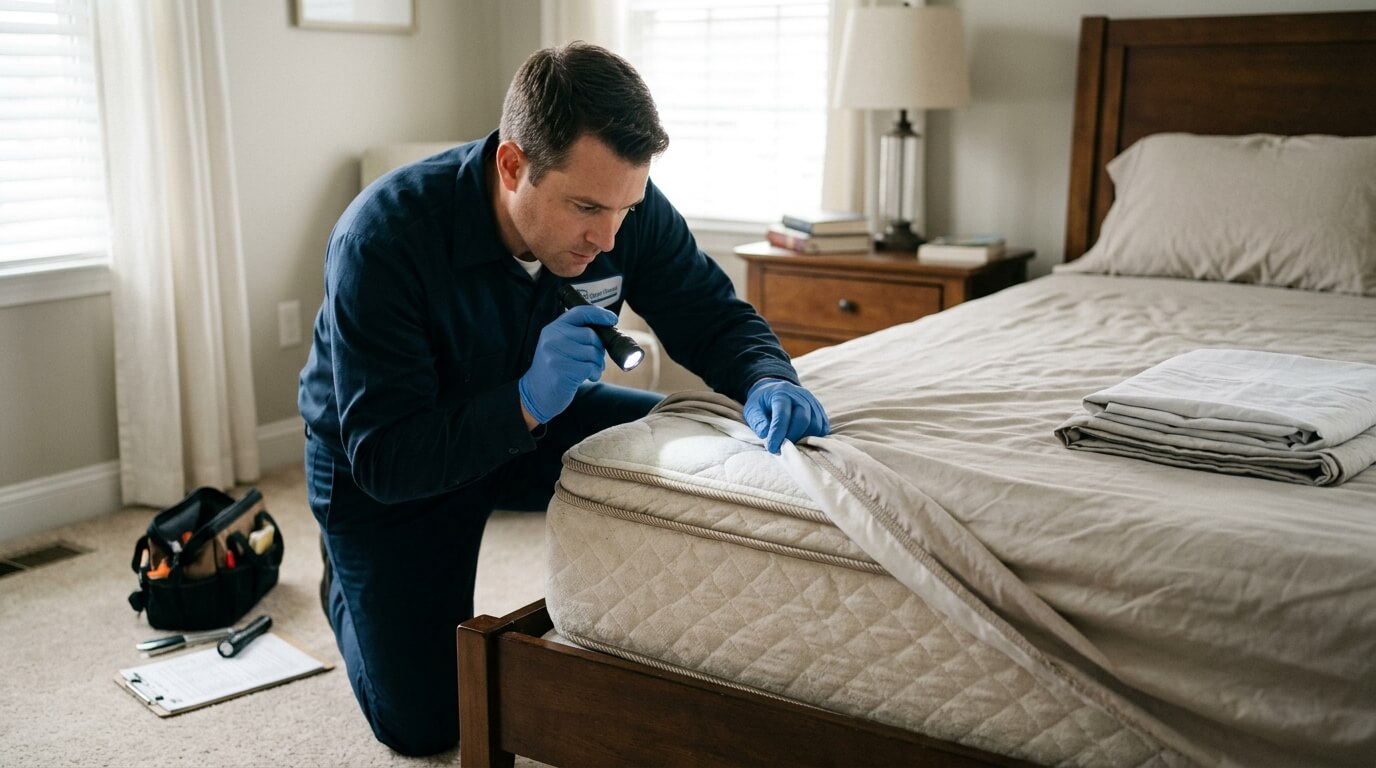
A professional inspection should look for both evidence of active mice and the conditions that allow rodents to enter and remain in the building. Finding only the location where a mouse was seen may not identify the source of the problem.
An inspection may examine:
- Droppings and other activity signs
- Food and pet-food storage
- Water sources and moisture
- Clutter and possible nesting areas
- Gaps around doors, pipes, vents, and foundations
- Areas where rodents may travel or shelter
Health Canada recommends reducing access to food, water, nesting sites, and building entry points as part of rodent prevention.
How Is a Mouse Infestation Usually Controlled?
Mouse control generally works best when several appropriate measures are combined. Trapping can address active mice, while exclusion and sanitation help reduce the conditions that support continued activity.
Depending on the property, control may involve:
- Correctly positioned traps
- Sealing suitable entry points
- Removing or securing accessible food
- Reducing nesting opportunities
- Improving sanitation
- Monitoring for continued activity
- Registered rodenticide products where appropriate
Health Canada identifies snap traps and electronic traps as physical control options and states that poisoned bait should not be the only method used.
When rodenticides are used, Health Canada advises following the product label and using tamper-proof bait stations where children or pets could otherwise access the bait.
Why Is Mouse Exclusion Important After Treatment?
Mouse exclusion matters because removing active rodents does not necessarily remove the routes they used to enter. Sealing appropriate openings can reduce the chance of continued or future intrusion.
Health Canada recommends:
- Sealing cracks and openings
- Repairing worn door thresholds
- Screening vents where appropriate
- Storing dry food and pet food securely
- Keeping garbage in containers with tight-fitting lids
- Removing clutter that can provide nesting areas
- Eliminating unnecessary water sources
These preventive measures are consistent with an Integrated Pest Management (IPM) approach, which combines prevention and control methods rather than depending on a single treatment. Health Canada also advises keeping kitchens clean and storing dry foods in suitable containers.
Is It Safe to Clean Mouse Droppings Yourself?
Mouse droppings and urine should be cleaned carefully because dry rodent waste can create a dust exposure risk. Health Canada advises against sweeping or vacuuming dry droppings.
For cleanup, Health Canada recommends precautions including:
- Wearing rubber gloves
- Wearing a dust mask
- Dampening droppings and debris before wiping them up
- Washing hands and exposed clothing after cleanup
The same guidance recommends proper handling and disposal of dead rodents and emphasizes careful cleaning of areas contaminated by rodent waste.
When Should You Call a Mouse Exterminator in Toronto?
Professional pest control may be appropriate when mouse activity continues, the entry point cannot be identified, or rodents are active in areas that are difficult to access.
A professional assessment can be useful when:
- New droppings continue appearing
- Scratching sounds remain active
- Multiple parts of the property show signs of mice
- Rodents are entering food-storage or work areas
- Activity appears to be coming from walls, ceilings, attics, or other concealed spaces
- Basic trapping and exclusion have not solved the problem
The goal should be to identify the cause of the activity and address both the rodents and the conditions supporting them.
For local rodent-control information, visit Ultimate Pest Solutions.
What Should You Look for in a Mouse Exterminator?
A reliable service should be able to explain what will be inspected, what control methods are being considered, and what prevention measures may be needed afterward.
It is reasonable to ask:
- What evidence of mouse activity was found?
- Where are the likely entry points?
- Which control method is being recommended and why?
- Are follow-up inspections or monitoring needed?
- What preparation and safety instructions apply?
Ontario regulates the commercial use of pesticides through the Pesticides Act and Ontario Regulation 63/09. Unless an exemption applies, commercial pesticide application generally requires an appropriate exterminator licence.
Are Rat Removal, Spider Control, and Earwig Control the Same as Mouse Control?
Rat removal, spider control, and earwig control are separate pest-management problems. Each pest has different identification, behaviour, harbourage, and control considerations.
A property can have more than one pest at the same time, but mouse treatment should remain focused on rodent activity. Mixing unrelated pest treatments into a mouse-control strategy can make the advice less clear and less useful.
FAQs About Mice Exterminators in Toronto
How quickly should a mouse problem be addressed?
Mouse activity should be addressed when signs are identified rather than ignored until the problem becomes more established. Health Canada recommends dealing with occasional rodent invaders promptly and using preventive measures to reduce further activity.
Can mice get through very small holes?
Yes. Health Canada states that mice can squeeze through cracks as small as a dime. Small openings around doors, foundations, pipes, vents, and utilities can therefore be important during an inspection.
Is trapping enough to eliminate mice?
Trapping can remove active mice, but trapping alone may not address entry points, food sources, water, or nesting conditions. Health Canada recommends combining physical control with rodent-proofing and sanitation.
Should I use mouse poison?
Rodenticides can be part of a control strategy, but Health Canada states that poisoned bait should not be the only method used. Products must be used according to their labels, and tamper-proof bait stations should be used where necessary to reduce access by children and pets.
What should I do with mouse droppings?
Do not sweep or vacuum dry droppings. Health Canada recommends dampening contaminated material before cleanup and using appropriate protective measures.
Final Conclusion
A mouse problem is easier to control when the source of the activity is identified instead of treating only the mouse that was seen. Signs such as droppings, scratching, gnaw marks, and damaged food packaging can help reveal an active infestation, while entry-point inspection, sanitation, trapping, and exclusion can address the conditions that allow mice to remain.
For Toronto properties with continuing activity or difficult-to-find entry points, a professional inspection can help determine the appropriate next steps. Any pesticide treatment should be carried out in accordance with applicable product directions and Ontario requirements.