Pests in a commercial building are not just a nuisance. They can trigger health code violations, damage inventory, and put staff or customers at risk. Commercial pest control services address these risks through licensed inspection, prevention, and treatment programs built specifically for business properties.
Commercial pest control is a licensed program of inspection, prevention, and targeted treatment designed to protect business properties from pest-related health, safety, and compliance risks. It differs from residential service mainly in scale, documentation requirements, and the regulatory standards a business must meet.
What Does Commercial Pest Control Include?
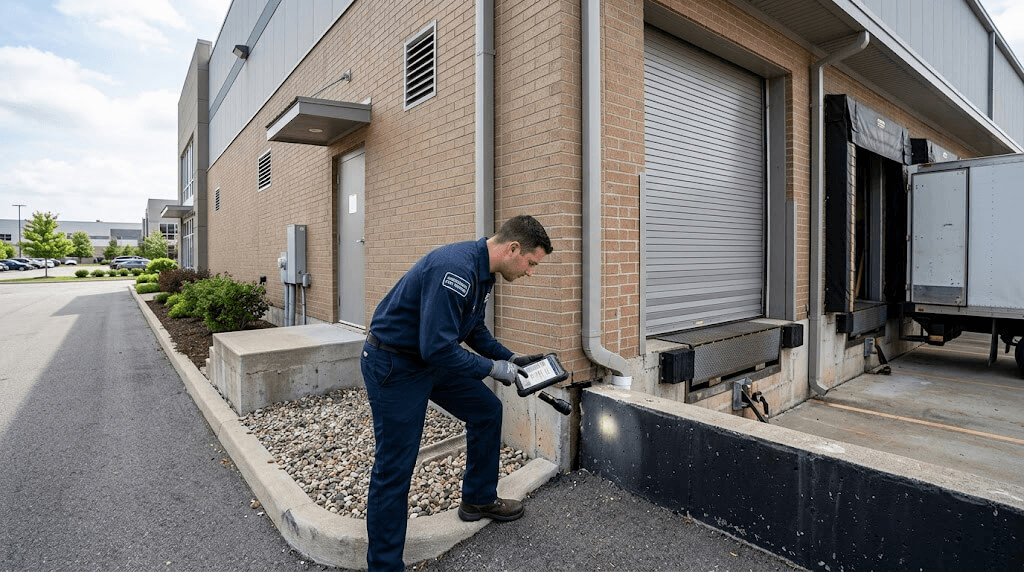
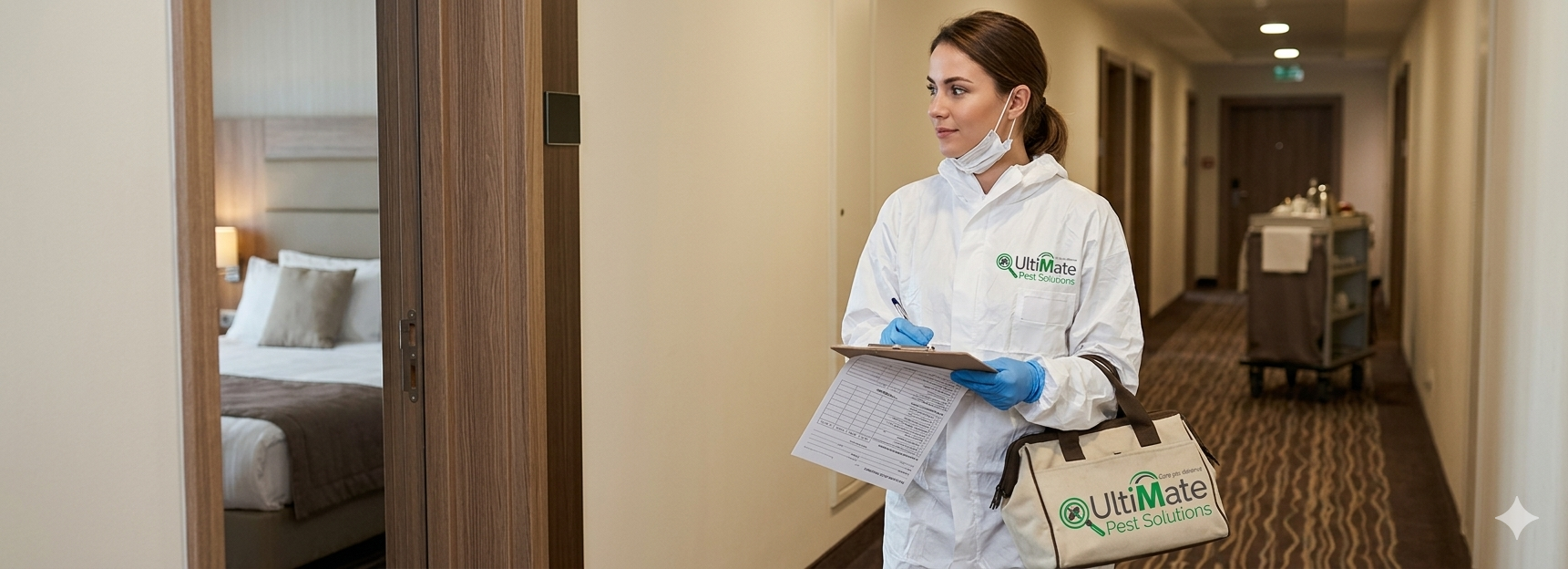
A commercial pest control program typically includes a facility inspection, a written treatment plan, scheduled visits, and documentation the business can produce for inspectors or auditors.
- Inspection identifying pest entry points and attracting conditions, such as gaps around loading docks, standing water, or food storage areas
- Monitoring traps, bait stations, or visual checks used to confirm activity before any treatment happens.
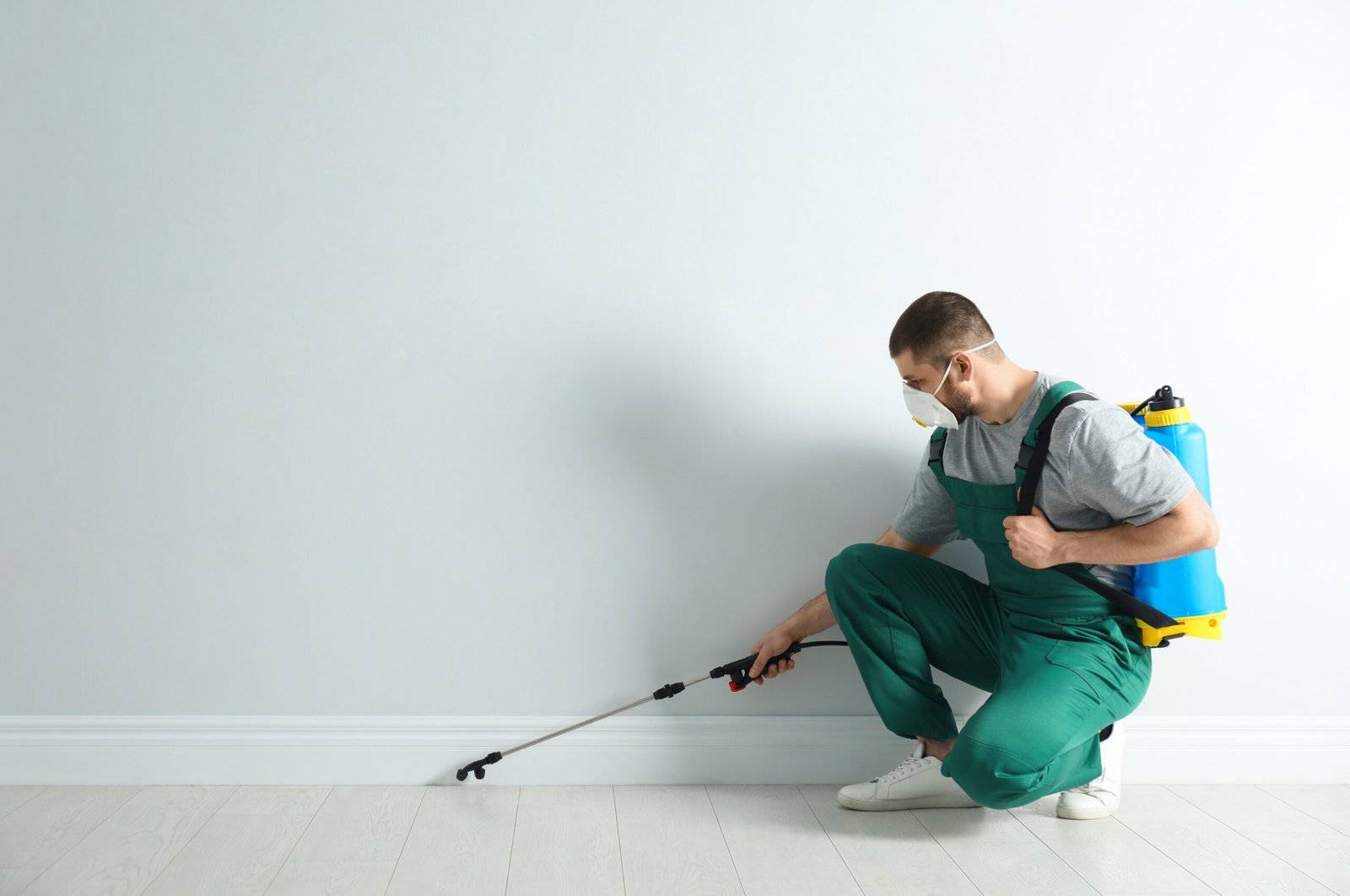
- Targeted treatment applied only where monitoring shows evidence, not on a fixed calendar schedule
- Exclusion work sealing entry points, repairing screens, and fixing structural gaps that let pests in
- Documentation service records the business can produce for auditors or health inspectors.
Food-service and healthcare properties should expect these records as a standard part of the service, since inspectors often request them directly.
How Does Integrated Pest Management (IPM) Work?
Integrated Pest Management (IPM) is a documented, prevention-first approach that treats pesticide application as a last resort, not the default response.
The U.S. Environmental Protection Agency describes IPM as a four-tiered process that starts with setting action thresholds: a business defines the point at which a pest sighting actually requires treatment, rather than reacting to every single insect. Monitoring and inspection come next, followed by prevention through exclusion, closing gaps, managing waste, and removing food and water sources pests rely on. Only when these steps are insufficient does a technician apply targeted treatment, and even then the goal is the least amount of pesticide needed to solve the problem.
For a business, the practical benefit of IPM is twofold. It reduces unnecessary chemical use in spaces where employees or customers spend time, and it creates paper trail inspection notes, treatment dates, and findings that regulators and auditors can review. A pest control provider who cannot produce that documentation is not running a real IPM program, regardless of what the word “eco-friendly” on their website suggests.
What Are the Most Common Commercial Pests?
The pests that matter most depend on the type of business, but a few show up across almost every commercial setting.
Rodents chew through wiring and packaging, contaminate stored food, and are typically drawn indoors as outdoor temperatures drop. Cockroaches, particularly the German cockroach, spread bacteria and commonly enter buildings through incoming deliveries and packaging rather than through exterior cracks. Flies and drain flies point to a different problem: decaying organic matter in floor drains or beverage lines, which sanitation alone often fixes faster than pesticides. Each of these pests requires a different inspection focus, which is why a generic monthly spray is a weaker strategy than an inspection-based program.
What Should Businesses Know About Wasp Removal?
Wasp nests near entrances, loading docks, or outdoor seating areas are a workplace safety hazard, not simply an inconvenience.
Female wasps can sting repeatedly, and hornets, a more aggressive subset of wasps are known to sting multiple times when a nest is disturbed. CDC/NIOSH occupational health guidance recommends that employers train outdoor or exposed staff to recognize nest locations, avoid disturbing them, and know how to respond to a sting, since a small percentage of people can develop a severe allergic reaction requiring emergency care. For a business, this means wasp removal near active work areas should be treated with the same urgency as any other safety hazard, and handled by someone trained to remove a nest without provoking a mass response from the colony.
How Does Mosquito Control Work for Commercial Properties?
Mosquito control for businesses centers on eliminating standing water, since mosquitoes need it to breed and it is the single most effective prevention target.
Public Health Ontario links mosquito-borne illness like West Nile virus directly to standing water in places like clogged catch basins, unused containers, and poorly drained parking areas. A commercial property with any of these features carries measurable risk, particularly through the summer months when local transmission is most common. Addressing drainage and water pooling on-site, alongside routine mosquito monitoring, reduces both pest pressure and the liability that comes with it.
How Do You Choose a Commercial Pest Control Company?
The clearest way to evaluate a provider is to check licensing, insurance, and documentation practices before looking at price.
- Licensing confirm the business holds an operator licence and technicians hold exterminator licences under Ontario’s Pesticides Act and Ontario Regulation 63/09; operating without them is not legal
- Insurance a legitimate operator carries liability insurance covering the work performed
- Documentation ask to see a sample inspection report, not just a service brochure
- IPM process ask how the provider sets action thresholds and documents findings; a company that cannot describe this in specific terms is unlikely to be running a real IPM program
Cost varies by facility size, pest pressure, and visit frequency, so a site inspection and a written quote are more useful than any flat-rate figure quoted over the phone.
Frequently Asked Questions
How is commercial pest control different from residential service?
Commercial service is built around larger facilities, stricter regulatory requirements, and documentation that a business may need for health inspections or audits, whereas residential service is typically a one-time or seasonal visit.
How often does a business need pest control visits?
Frequency depends on the type of business and pest pressure; food-service and healthcare facilities generally need more frequent monitoring than an office with low pest activity.
Is IPM more expensive than traditional pest control?
Not inherently IPM often reduces cost over time by preventing infestations through exclusion and monitoring rather than repeated reactive treatments.
Do commercial pest control technicians need a licence?
Yes, in Ontario, technicians applying pesticides commercially need an exterminator licence, and the business itself needs an operator licence.
What should be included in a service report?
A useful report lists what was inspected, what was found, what action was taken, and the date, so the business has a record for its own files or for a health inspector.
Conclusion
This guide covers general practice and regulatory context; specific requirements can vary by municipality and facility type, so confirm details with a licensed local provider. Commercial pest control works best as an ongoing, documented program rather than a one-time reaction to a sighting. Licensing, inspection-based IPM, and clear documentation separate a reliable provider from a basic spray service. Learn more about our commercial pest control services to see how an inspection-first approach applies to your property.